window.dataLayer = window.dataLayer || []; function gtag(){dataLayer.push(arguments);} gtag('js', new Date()); gtag('config', 'UA-27011084-1');

DesignCon

How to Design Predictable Interconnects up to 448 Gbps

2026-03-19T15:32:53-08:00

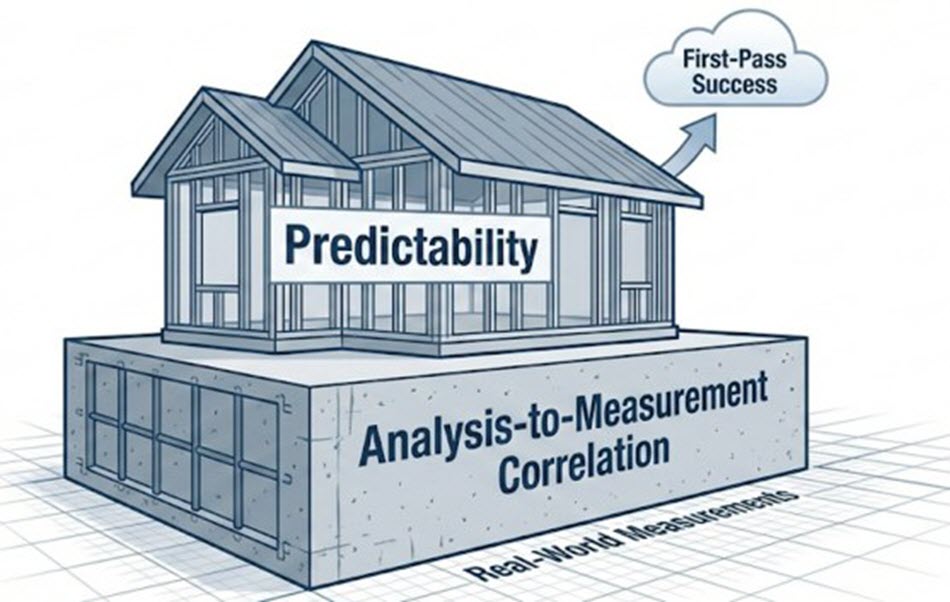
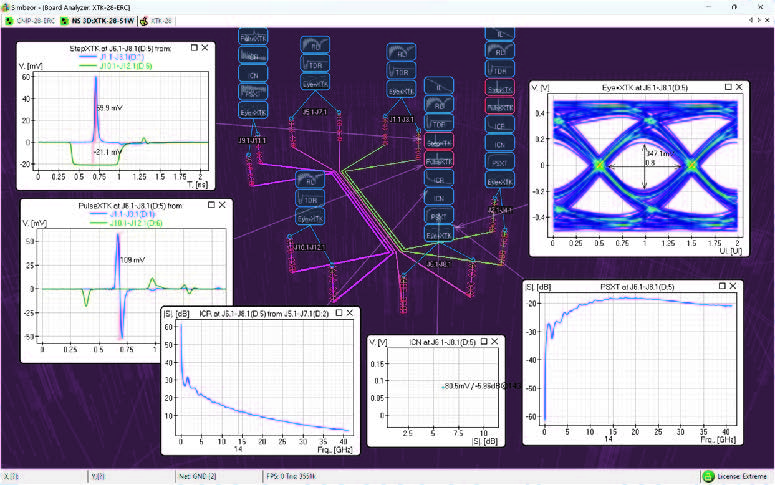
This presentation analyzes second-order design features using precision measurements of test vehicles and digital twins. We propose a metric-driven methodology based on AI/ML to determine relevant parameters for simulating anisotropic [...]

How to Design Predictable Interconnects up to 448 Gbps2026-03-19T15:32:53-08:00

S-Parameter Measurement and Fixture De-Embedding Variation Across Multiple Teams, Equipment and De-Embedding Tools

2026-03-19T15:06:37-08:00

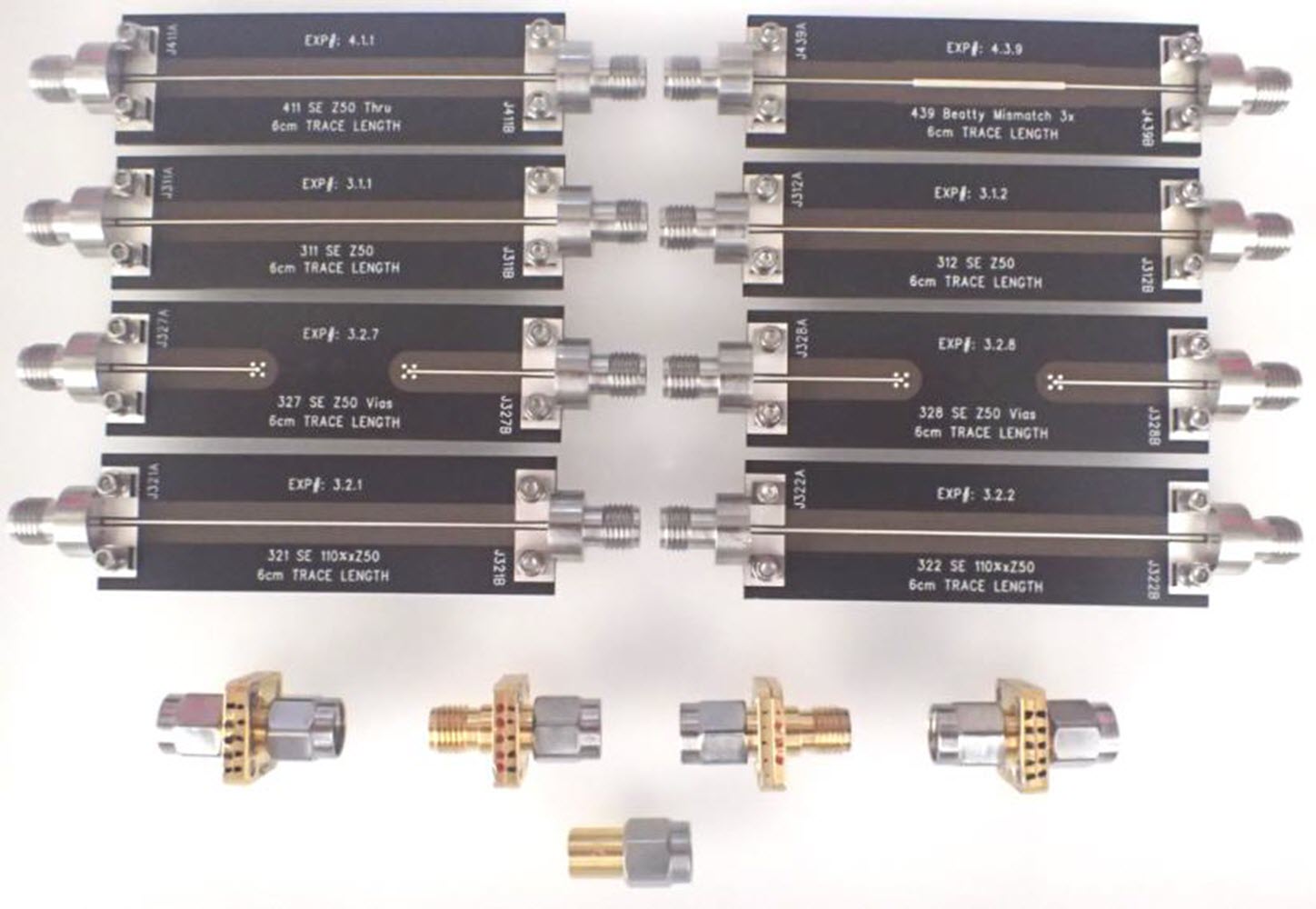
In the context of the IEEE P370 standard activities, the members collected data on how measurement results and de-embedding results can vary across different teams. In this paper, we present the analysis of the data collected.

S-Parameter Measurement and Fixture De-Embedding Variation Across Multiple Teams, Equipment and De-Embedding Tools2026-03-19T15:06:37-08:00

Robust Method for Addressing 12 Gbps Interoperability for High-Loss and Crosstalk-Aggressed Channels

2026-03-18T08:32:18-08:00

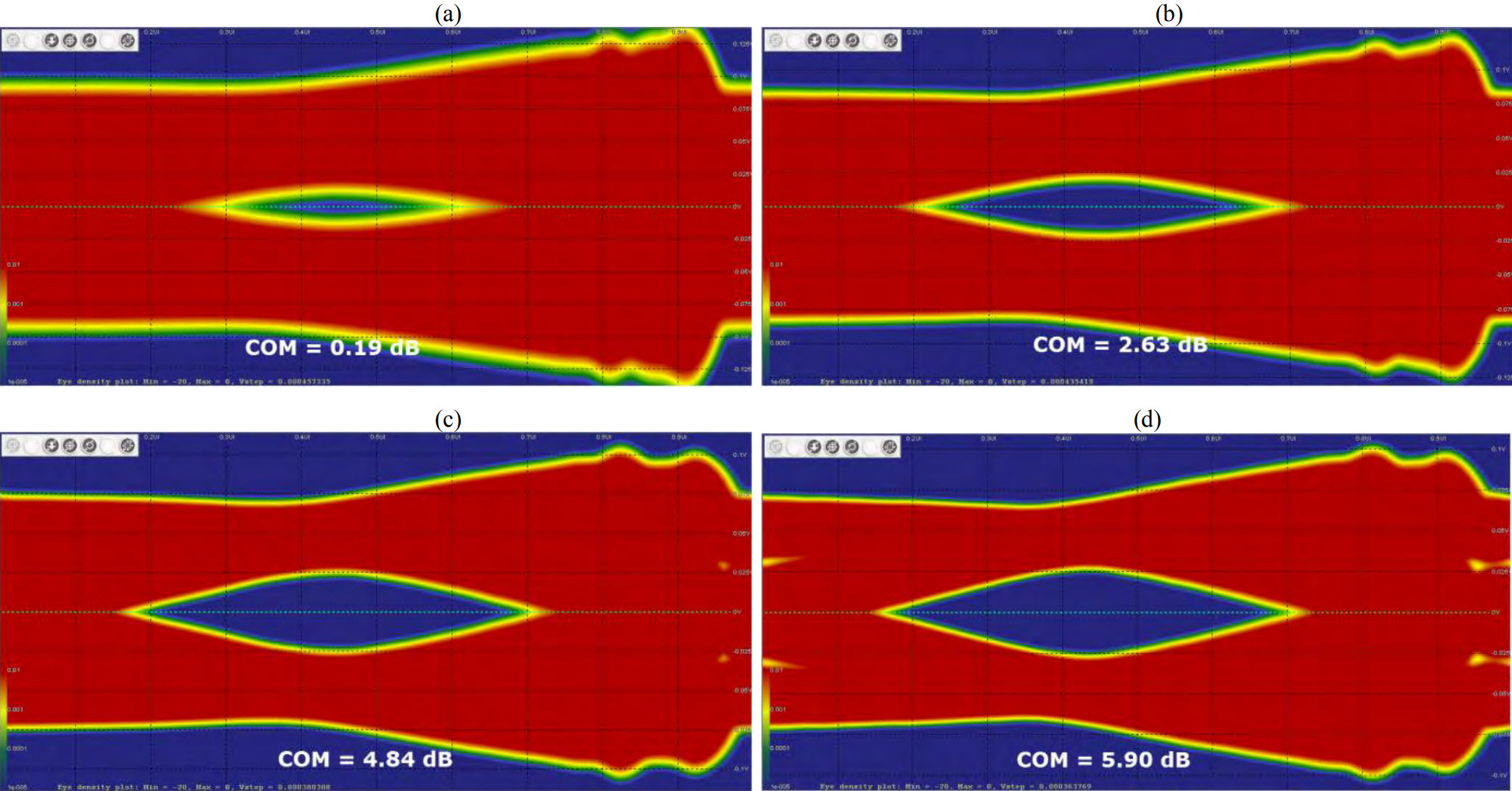
This paper addresses a new methodology for 12 Gbps interoperability that combines a concerted family of pathological channels, internal eye monitoring, and external EQ simulation tools, providing insight into an EQ optimization strategy that addresses the specific channel’s mix of crosstalk noise, jitter, and channel loss.

Robust Method for Addressing 12 Gbps Interoperability for High-Loss and Crosstalk-Aggressed Channels2026-03-18T08:32:18-08:00

Practical identification of dispersive dielectric models with generalized modal S-parameters for analysis of interconnects in 6-100 Gb/s applications

2026-03-18T08:39:54-08:00

A novel method for extraction of dispersive dielectric parameters to 50 GHz is proposed. The method doesn’t require advanced de-embedding, and is based on correlation of measured and simulated generalized modal S-parameters of a line segment. First, VNA measurements for two line segments are made and used to compute generalized S-parameters of a difference segment. Second, 3D full-wave model of the difference segment with conductor model with roughness is used to identify the dielectric properties. We finalize the paper with the derivation of dielectric models for low-cost FR4-type and for expensive low-loss high-frequency materials. The advanced models can be used for practical electromagnetic analysis of interconnects for the 6-100 Gb/s realm.

Practical identification of dispersive dielectric models with generalized modal S-parameters for analysis of interconnects in 6-100 Gb/s applications2026-03-18T08:39:54-08:00
Go to Top