
window.dataLayer = window.dataLayer || []; function gtag(){dataLayer.push(arguments);} gtag('js', new Date()); gtag('config', 'UA-27011084-1');

DesignCon 2025

October 22, 2025 EDI CON Online Workshop – Understanding anisotropic materials and tolerances can increase performance at 112/224Gbps and Beyond

2025-10-21T14:41:13-08:00

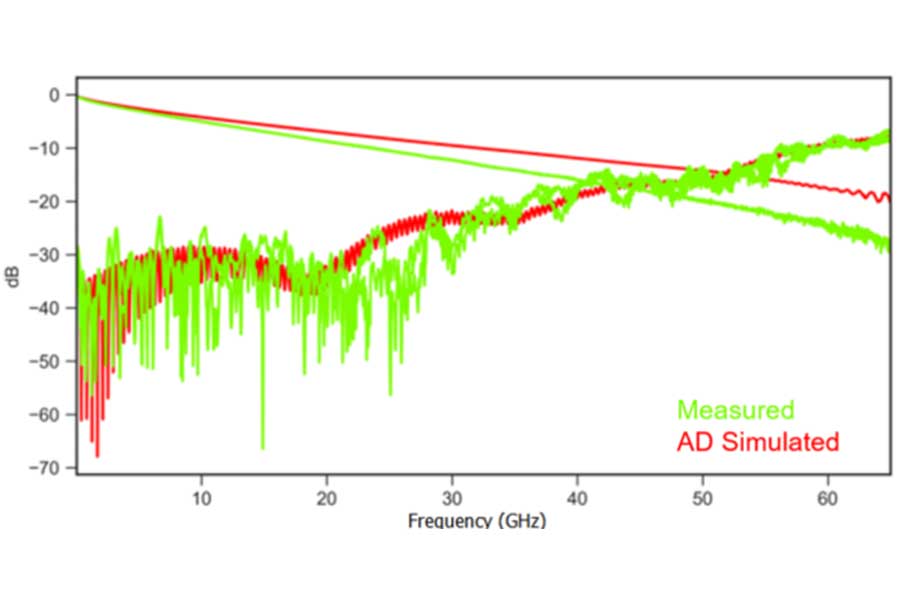
The “need for speed” in AI systems is driven by their requirement to process large data sets, both during training and application. Channel design is constrained by the balance between acceptable loss budget and the power consumed in equalization and error correction. Reducing channel loss can enable lower power or longer unrepeated channel lengths. Historically, high-speed serial links focused on material selection to manage attenuation. In 224 Gbps PAM4 systems, however, second-order factors like impedance variations, crosstalk, and power loss into cavities significantly impact the loss budget.

October 22, 2025 EDI CON Online Workshop – Understanding anisotropic materials and tolerances can increase performance at 112/224Gbps and Beyond2025-10-21T14:41:13-08:00

Free signal integrity? How understanding anisotropic materials and tolerances could increase performance

2025-04-22T09:36:37-08:00

The “need for speed” in AI systems is driven by their requirement to process large data sets, both during training and application. Channel design is constrained by the balance between acceptable loss budget and the power consumed in equalization and error correction. Reducing channel loss can enable lower power or longer unrepeated channel lengths. Historically, high-speed serial links focused on material selection to manage attenuation. In 224 Gbps PAM4 systems, however, second-order factors like impedance variations, crosstalk, and power loss into cavities significantly impact the loss budget.

Free signal integrity? How understanding anisotropic materials and tolerances could increase performance2025-04-22T09:36:37-08:00
Go to Top